Spiga

Showing posts with label latest. Show all posts

Android Bug (Update)

Update: With the new Jelly bean update rolling out, this bug seems to be fixed on 4.1.2 android, but is still present in 4.0.3 and 4.0.4 ICS versions of S2.

I have been using android for past few months. So this post was just to test the bug in the android stock browser (Touchwiz) that was going around and haven't been fixed yet. So clicking on the following linksfrom android phone will open phone dialer and do as mentioned.

Read more!

Dell introduces Studio 14z Laptop

On the same day it was announced that Dells sales were down 64% when compared to last year, they announced a new Studio laptop, the Studio 14z which will feature a 14 inch HD screen and a 500 GB hdd.

Dell Studio 14z measures 1.2 inches at the thickest point, and weighs 1.95kg pounds. This 14-inch notebook has HD 720p video content supporting LED display with 1366x768 resolution. Equipped with 2.66GHz Intel Core 2 Duo processors, Studio 14z supports using up to 5GB DDR3 1066MHz memory and offers up to 500GB 7200RPM storage support.

For graphics this notebook has the Nvidia GeForce 9400M integrated graphics that are also used in Apple s unibody MacBooks, Macbook Pro
and MacBook Air models.

Hooking Studio 14z to your HD set-up wouldn t be a problem since the notebook offers DisplayPort and HDMI for HD video output. For removable storage, Studio 14z offers three USB 2.0 ports and eSATA port with power share, Express Card Slot, FireWire port, and optional 8-in-1 media card reader.


Audio output is supported with 4-watt SRS-enhanced 2.0 integrated stereo speakers with discrete tweeters. Another interesting part is that Dell offers 64-bit Windows Vista Home Premium and Vista Ultimate as operating system
option.

The Studio 14z is available in 6 colors: Chain Link, Midnight Blue, Spring Green, Plum Purple, Ruby Red and Promise Pink (U.S. only). Dell will donate $5 to Susan G. Komen for the Cure from the purchase of each Promise Pink laptop. The six colors willl appeal to pretty much everyone.

The Studio 14z notebooks are available now directly from Dell via Dell.com or over the phone, the starting price is $649.

Source:1 2

Read more!

Chinese mobiles to be useless by month-end

NEW DELHI: Around 30 million mobile phones - or about 8% of all mobiles in the country - will become useless by the end of this month. These are
unbranded Chinese mobiles that do not have IMEI (International Mobile Equipment Identity) numbers and pose a serious security risk.

All mobile phone service users have been directed by the Department of Telecom (DoT) to disconnect these phones. In fact, two deadlines - January 6 and March 31 - have already been missed by the companies. Now they have undertaken to acquire the necessary equipment to track these phones by April 15 and discontinue their services thereafter - a process that is expected to take another 15 days, that is, by April 30.

Under law, all GSM phones are required to have a unique IMEI number that gets reflected at cell phone towers with which, if required, the location of a mobile phone user can be tracked. These Chinese phones, however, show up as a series of zeroes at cell towers or by their cloned IMEI number. Either way, they can’t be tracked.

The CBI first pointed out the risk to the Union home ministry which took up the issue with DoT. In turn, DoT has instructed service providers to disconnect all phones without IMEI numbers. The service providers, according to DoT sources, have dragged their feet "despite the obvious security risk to the country."

Service providers told TOI they needed to equip themselves with Equipment Identity Registers which would allow them to check if calls are from legal or fake phones. EIRs, they said, would be with all by April 15. The weeding-out will then begin.

8 lakh Chinese cells enter India every month

The security risk from unbranded Chinese mobiles, to be phased out by the end of this month, can be guaged from the fact that a number of bombs have been triggered by terrorists by these phones. Mobile phones are part of terrorists’ essential equipment, for getting instructions from their handlers or for passing on information. If they use legal phones, their location can be found by IMEI numbers.

To give an example, after the Mehrauli blast the terrorists melted away without a trace. However, assuming that they had mobile phones, it should have been possible to track them down by zeroing in on all the phones that started to move away from the blast site immediately after the bomb went off. Instead of blindly putting roadblocks across the city, the security forces could have pinpointed all suspicious post-blast movements and caught the terrorists.

Security forces believe that, as it appears in the Mehrauli case, terrorists have taken to these unbranded Chinese phones to mask their movements. Currently, about 7-8 lakh Chinese phones come into the country every month. This figure was much higher before the talk of their ban started - in September 2008, 1.5 million of these phones came into India.

Naturally, not all of them are used by terrorists (only their easy availability makes them readily available). These phones are popular with consumers because of their low cost, often less than half the price of branded phones. That’s why service providers are seeking time to inform these users to change their handsets.

Sources in the home ministry, which first took up the issue with DoT in August last year, said "the problem of combination of IMEI numbers" has forced DoT to recognise the security risk and order a blanket ban on them.

"Combination of IMEI numbers", or many phones with the same IMEI number, happen because the number is cloned in lots of 100, 1,000 or 5,000 phones by makers of unbranded Chinese mobile phones. This makes it impossible to trace a call or to locate a particular phone.

Read more!

3D is coming to a living room near you

Three-dimensional TV is coming to a living room near you. But will the technology spur a consumer spending spree like digital and high-definition TV did before it? Or will 3D end up being the next big flop?

One thing is clear, TV manufacturers need something new to get people buying TVs. Over the last couple of years, TV manufacturers have experienced a sales boom as consumers upgrade to digital TVs in anticipation of the government's mandated switch to digital TV broadcasts in February 2009.

Eager shoppers have also been upgrading to high-definition TVs as movie studios, cable and satellite operators, and TV broadcasters have begun offering more programming in HD.

But as the economy worsens, the forecast for the TV market is looking grim. The LCD TV market is only expected to grow about 17 percent in terms of units shipped in 2009, according to research firm DisplaySearch. This is down from growth of about 29 percent in 2008.

Plasma TV growth is also expected to suffer with the market only expected to grow by about 5 percent in 2009 compared with a 24 percent rise in 2008, DisplaySearch said.

As a result, TV makers are looking for the next hot thing to attract new consumers. And some are hoping 3D TVs could be it.

At this year's Consumer Electronics Show in Las Vegas, four of the top selling TV manufacturers - Samsung Electronics, Sony, LG Electronics and Panasonic - showed off their latest versions of 3D TVs.

Panasonic set up a mini-home theater where its 103-inch, plasma 3D screen showed clips from New Line Cinema's Journey to the Center of the Earth and Walt Disney Pictures' animated film Bolt. They also showed high-definition 3D footage from NBC's broadcast of the 2008 Summer Olympics in Beijing.

While some manufacturers, such as Mitsubishi, Phillips, Samsung, and Sharp, have already begun selling 3D-ready TVs, the top four manufacturers plan to have new, advanced 3D TVs on sale toward the end of 2009 and into 2010.

But the big question is whether consumers, particularly American consumers, will be willing to upgrade to a new TV just because it has 3D. Pricing for today's 3D ready TVs is comparable to other flat screen HDTVs. Samsung and Mitsubishi currently sell their 3D-ready TVs for between $1,000 and $2,800, depending on functionality. These prices are in line with average prices for HDTVs that don't offer 3D readiness.

Keisuke Suetsugi, a manager for the audio visual center at Panasonic, believes that even the newer, more advanced 3D TVs will not cost much more than TVs without 3D. So for consumers already in the market for a TV, adding 3D readiness might not add much cost. But will 3D be enough to compel cutting edge consumers to replace their two or three year old TVs? That's what TV manufactures are hoping.

Three-dimensional movies have been around since the 1950s. And for most of its lifespan the technology has been seen more as a gimmick than something that truly enhances the movie-going experience. But newer technology and advanced special effects are helping 3D movies break into the mainstream.

TV makers believe that much of the demand for 3D will come from Hollywood, which is pushing 3D in a big way. Last year, DreamWorks announced that all its films will be produced for 3D production beginning in 2009. The company has partnered with chipmaker Intel to build processors that will help make 3D in the home a reality.

Sports leagues have also been experimenting with 3D technology. Both the National Basketball Association and the National Football League have broadcast events and games in 3D to movie theaters.

From a technical standpoint, the technology is available and mature enough today to make 3D TVs available at a reasonable cost to consumers. But there are still a few drawbacks that could prevent 3D TV from becoming the next big thing in home entertainment.

For one, to get the really cool, immersive 3D experience without getting a massive head-ache, consumers will have to wear special glasses when they're watching TV in 3D. The glasses are needed because 3D imaging requires sending a different image to each eye. And the glasses help merge the images in the mind and trick the brain into thinking that it's seeing a single 3D image.

I checked out Panasonic's home theater in 3D. I must admit, the experience was phenomenal. I felt like I was on the floor at the Olympics opening ceremonies in Beijing right along side the hundreds of dancers and drummers. But without the glasses, the image looked fuzzy.

Panasonic's Suetsugi admits that in a perfect world, consumers should be able to have the immersive 3D experience without wearing glasses. But he said that it will be at least 10 years before the technology is advanced enough to provide a similarly robust 3D experience without glasses.

"Glassless 3D would be ideal," he said. "But it's just not possible to do that now and get the same quality experience. You would need at least 50 times more pixels to get a display to provide the same 3D experience that we provide with our TV. We are still 10 years away from that kind of technology."

Taesoo Park, a chief research engineer at LG, which makes 3D display monitors for advertising and digital signage, agrees. LG plans to start selling its 3D TVs, which require glasses, late in 2009 or in the beginning of 2010. It's glassless digital signs were also on display at CES.

"Glassless 3D is available today for digital signage and advertising," Park explained. "But the technology is not ready for TVs, because it would hurt people's eyes or give them a headache to look at today's 3D displays for any length of time. It will be at least a decade before we can get the technology to make glassless TV a reality."

That said, some manufacturers claim they have developed technology that doesn't require glasses. Phillips uses a technology it calls WOWvx. 3M and Toshiba also showed off glassless 3D screens at CES. 3M has created a thin film technology that can be used to beam light selectively to the viewer's right and left eyes.

But glasses aren't the only thing that could hold back 3D adoption. Currently, there's no standard way to get 3D footage from the movie studios or from a live broadcasts to the home. Companies, such as Panasonic, are already working on developing a standard. But industry watchers fear that competing standards could emerge and spur another "format" war like the one that pits HD DVD and Blu-ray against each other.

Panasonic's Suetsugi said he is hopeful that a common standard for 3D Blu-ray hardware, software and TVs will emerge sometime this year, paving the way for 3D TV sales to pick up in 2010.

In addition to the standards issue, another hurdle for 3D TV has to do with the high production cost of shooting movies and events in 3D, as well as, the high cost of transporting the video across networks. Three-dimensional video requires multiple cameras for shooting. And it also requires multiple high-definition streams for transporting the video over carrier networks.

Regular standard definition television broadcasts consume more bandwidth capacity than other types of traffic like audio or text. High-definition video eats up even more. And it would likely take at least two full high-definition channels to broadcast live just one game in 3D.

This means that service providers, such as cable or satellite operators, would have to upgrade their infrastructure to handle the high bandwidth demands. Verizon, which is deploying fiber directly to consumers' homes for its Fios service, is already in good shape. But others such as Comcast and Time Warner Cable, are already finding it difficult to carve out enough bandwidth to regular HD video as well as Internet video on their networks.

"Transporting live high-definition 3D streams is very expensive," said Steve Hellmuth, executive vice president of technology and operations for the NBA. "So there has to be sufficient demand and a pool of content before satellite and cable operators will devote resources to delivering it. I really think that Hollywood will initially drive adoption of 3D in the home."

source: cnn.com

Read more!

Windows 7 beta & ways to get valid keys


Microsoft has apparently decided that it has enough server capacity and has made the code available for the Windows 7 beta.

"The Windows 7 Beta is now available for download," Microsoft said on its Web site. "Thanks for your interest and help with the beta."

The software was supposed to be made available on Friday, but the company delayed the release after a day filled with Web site problems.

Update: Microsoft offered up some recommended specifications for the beta, but cautioned those could change for the final release. It called for a 1GHz processor (either 32-bit or 64-bit), 1GB of system memory, 16Gb of disk space, support for DirectX 9 graphics with 128 MB memory, as well as a DVD burner and Internet access.

The software maker also cautioned users should have some technical skills, such as the ability to "burn an ISO file to make an install DVD. (A good example of what we mean by 'technical')." It also said folks should know how to install Windows (uh, yeah) and set up a network.

Furthermore, the company cautioned that the beta is not the quality one should expect from a final release. "It can be glitchy--so don't use a PC you need every day."


Download: Windows 7 x86 (32bit) and x64 (64 bit) If you have issues with the direct links try via the Akamai Java download manager 32bit and 64bit, you will need to copy and paste the links into a new window otherwise you'll get redirected to the Windows 7 home page.


Here's the steps for a key:

1. Visit TechNet Downloads, sign in at the top right and let the page load
2. Within the same window copy and paste "https://www.microsoft.com/betaexperience/scripts/gcs.aspx?Product=tn-win7-64-ww&LCID=1033" into the address bar or "https://www.microsoft.com/betaexperience/scripts/gcs.aspx?Product=tn-win7-32-ww&LCID=1033" (64bit key but will work on 32 too, if you get an error refresh a few times)...enjoy the result below (32 bit link seems to work better), whilst stocks last. If you are still having issues try clearing your temp files and deleting all cookies.


click on image to enlarge

According to Microsoft there are 2.5 million keys to go around worldwide so plenty in other words. Microsoft is also providing a QFE patch for the MP3 corruption issues that have plagued build 7000, this should be online shortly as KB961367. It's extremely important you apply this patch as you may lose parts of your MP3s if the patch is not applied. 32bit and 64bit patches are now available.

source: news.cnet & neowin

Read more!

Palm introduces Palm Pre

Palm introduced today the Palm Pre which puts everything you ever wanted into one package. This phone will be limited to Sprint initially but will spread to other carriers over time.


The impressive spec list for the Palm Pre is listed below:
  • High-speed wireless (EV-DO Rev. A or HSDPA, depending on version)
  • 802.11b / g WiFi
  • Integrated GPS
  • 3.1-inch 24-bit color 480 x 320 display
  • Dedicated gesture area below display
  • Slide-out portrait QWERTY keyboard
  • Exchange email support in addition to POP and IMAP
  • IM, MMS, and SMS messaging
  • High-performance browser
  • 3-megapixel camera with LED flash and "extended depth of field"
  • 3.5mm headphone jack
  • Bluetooth 2.1 + EDR with A2DP
  • 8GB of internal storage
  • USB mass storage mode
  • MicroUSB connectivity with USB 2.0
  • Proximity sensor for detecting when phone is near face
  • Light sensor to automatically dim display
  • Ringer mute switch
  • Removable rechargeable battery
  • 59.57 x 100.53 x 16.95mm closed
  • 4.76 ounces

The OS (based on Linux) is no slouch either, a very modern, clean, and user friendly interface with all the eye candy you could ever want. The web browsing is based on Webkit and appears to work in a manor equal too, if not better than the coveted iPhone.
Palm has confirmed that an app store will be available for the new platform and an SDK will be released in the near future. While many have put Palm to rest over its defunct OS, this phone and OS package may save the company. So i would say, the first true iPhone competitor is here.


Read more!

New Asus S121 Netbook with Windows 7

Asustek Computer on Tuesday debuted an ultra-thin, light netbook called the S121 with two new technologies, Microsoft's yet-to-be released Windows 7 OS and the world's largest solid state drive (SSD) at 512GB.

The S121 is just under an inch thick and is 11.7-inches by 8.3-inches, weighs about 3 lbs and carries a touchscreen that runs a specialized software Asustek developed for easy touch navigation.

The use of Asus's touch mode software on Microsoft's Windows 7 OS shows how closely the two companies are working together.

"We're deeply partnered with Asus on Windows 7," said David Fester, general marketing manager at Microsoft's OEM division, at a news conference ahead of the International Consumer Electronics Show, which opens Thursday in Las Vegas.


And although the S121 will be available about a month from now, it probably won't come with Windows 7. The new OS isn't slated to hit markets until next year, although some pundits say it could be released as early as mid-2009.

The new netbook will also "cost quite a bit," said Jonney Shih, chairman of Asus, around US$1,649 due to the 512GB SSD on board. He said Asus used its own technology to build the SSD.

SSD technology generally promises speedier software loading than HDDs (hard disk drives) and better power efficiency. But SSDs are far more expensive than HDDs and they don't last as long.

In fact, some analysts at the Storage Visions conference currently going on in Las Vegas, warned users to beware of some SSD technology because of the wide range of quality among SSD makers. Some companies may be using less expensive, but lower quality chips in their SSDs. One of the key components on an SSD to ensure smooth, fast running, is the controller chip, but high quality controller chips for SSDs are expensive, and some makers have turned to using controller chips made for USB flash sticks in their SSDs, leading to far slower write times and reliability.

Asustek's 512GB SSD announcement comes just a few weeks after Toshiba revealed its own 512GB SSD for laptops. Few other companies have announced SSDs with such large storage capacity.

The S121 will come with a 1.33GHz Intel Atom microprocessor. Few other details about the device were immediately available.

Netbooks are miniaturized notebooks about two-thirds the size of a normal laptop that have become popular for mobile computing and Internet use. The devices are designed with less powerful chips and other components so they're more battery efficient, cost less and usually weigh just a few kilograms.

Read more!

iTunes going DRM free

Apple have just announced, during the MacWorld keynote, that 10 million songs on iTunes will become DRM free by the end of Q1 2009.

On the Apple iTunes store the text reads "This is a special offer to upgrade your entire music library of previously purchased songs, albums and music videos now available in iTunes plus. You will be charged $0.30 a song, 30% of the current album price and $0.60 a music video to upgrade. Just click buy now and new versions of all your music below will be downloaded in iTunes Plus. This page updates automatically as we add more music in iTunes Plus. Please check back often!"

Tracks should sell for 69¢, 99¢, and $1.29 -- depending on their demand.

In a separate announcement, iPhone users are now able to purchase music from the iTunes store via 3G. Previously users could only download music on a Wi-Fi network.

Read more!

SlingPlayer Mobile for iPhone

Six months after announcing its intention to bring SlingPlayer to the iPhone 3G, Sling Media has another announcement to make--just not the one you're wishing for.

SlingPlayer Mobile for iPhone isn't ready yet, Sling said on Tuesday, but it is on its way.

Like SlingPlayer Mobile for Windows Mobile, Palm, Symbian, UIQ, and BlackBerry (beta) platforms, this iPhone version will let you access one or more Slingboxes from your mobile device, and watch your TV stations on-the-go.

You'll also be able to manage your DVR from the iPhone, and can synchronously add and remove favorite channels directly from the phone's interface--a first for the SlingPlayer Mobile line.


SlingPlayer Mobile for iPhone


In our demo, the client streamed live, high-quality video of stations like MTV and TBS on both Wi-Fi and the iPhone's 3G network. Swiping the screen horizontally advances you through favorite stations, and flicking up and down rotates through all your home channels.

Sling Media says it will submit the file to the iTunes AppStore by the end of the first fiscal quarter. While Sling Media shared no firm price tag, it could mirror the $29.99 lifetime fee of SlingPlayer Mobile on other platforms.

Before getting too excited, just remember that Apple has been known to kill promising apps, ostensibly for the crime of a large data transfers. SlingPlayer Mobile for iPhone could suffer the same fate. Assuming it doesn't, the client still faces competition from Orb, whose full version, OrbLive, delivers live TV and media stored on your PC for $10.

source: Macworld 2009

Read more!

HP's new Pavilion dv2 ultraportable

Hewlett-Packard's new Pavilion dv2 is an ultraportable and the new Athlon Neo silicon inside from Advanced Micro Devices will try to prove that point.

AMD is introducing new chips at the Consumer Electronics Show in Las Vegas that target the no-man's land between Netbooks and notebooks. Typically, these designs are referred to as ultraportables--the most salient examples being Apple's MacBook Air, the Toshiba Portege, and the Sony Vaio TT series.


click on image to enlarge

So what makes AMD's platform different? In one word, price. Ultraportables fall into the boutique category of laptops: very stylish, very slim, very light--and very expensive. Usually ranging between $1,500 and $3,000. HP's notebook with Athlon Neo silicon cuts the price in half. The Pavilion dv2 will start at $699 and top out at $899 for standard configurations.

HP 12-inch Pavilion dv2 ultraportable starts at $699, at least half the price of traditional ultraportable notebooks like the MacBook Air, Toshiba Portege, and Sony Vaio TT series.

HP 12-inch Pavilion dv2 ultraportable starts at $699, at least half the price of traditional ultraportable notebooks like the MacBook Air, Toshiba Portege, and Sony Vaio TT series.
(Credit: Hewlett-Packard)

The dv2, at 3.8 pounds, is slightly heavier than ultraportables that typically weigh between 2.5 and 3 pounds. It is 0.9-inches thick, slightly thicker than more expensive ultraportables like the MacBook Air.

But the Pavilion dv2 will pack features such as an AMD-ATI Mobility Radeon HD 3410 separate (discrete) graphics chip, a relatively large hard disk drive (HP lists drives up to 500GB), and a 12.1-inch LED screen. Features that differentiate it from Netbooks and put it squarely into ultraportable territory.
AMD Athlon Neo silicon details


click on image to enlarge

AMD Athlon Neo silicon details
(Credit: AMD)


The dv2 will also come with WWAN (Wireless Wide Area Network) options as well as standard Bluetooth and Wi-Fi.

Bahr Mahony, AMD's manager of mobile products, said in an interview that one of the few ultraportables available today with discrete graphics is the MacBook Air, but this starts at a whopping $1,800. (The Air uses Nvidia's GeForce 9400M graphics and Intel's Core 2 Duo low-voltage processors.)

The Athlon Neo platform can handle 1080p HD playback and a "casual" gaming experience with realistic 3D graphics, using the optional ATI Mobility Radeon HD 3410 graphics chip.

AMD's Athlon Neo processor--formerly code-named "Huron" under the platform codename "Yukon"--runs at 1.6GHz and has a power envelope of 15 watts, comparable to Intel ULV (Ultra Low Voltage) Core 2 Duo processors that power ultraportables today.

AMD's Neo does fall short in one respect, however. Currently it is only single-core, whereas Intel ULV processors are dual-core at a comparable power envelope, and, moreover, typically integrate 6MB level-2 cache memory to boost performance. AMD's Neo has only 512K of cache memory.

A dual-core chip, code-named "Conesus," will come in the second half of this year, according to AMD's Mahoney.

The first HP Pavilion dv2 ultrathin notebook is expected to be available from HP in the second quarter.

credits: Brooke Crothers

Read more!

Google plans to release Picasa beta for Mac

Google plans to release on Monday a beta version of Picasa for Mac OS X, helping Apple fans catch up to Windows and Linux users already employing the free tool for editing, cataloging, and uploading photos.

click on image to enlarge

The Mac version largely matches the features in Picasa 3 for Windows, said Jason Cook, Picasa's marketing manager. Though the company has been scrambling to include some secondary features such as geotagging and the ability to get photos printed, the core abilities of Picasa are present, he said.
Picasa lets people edit and print photos, create collages and movies, and add labels, star ratings, and tags. More significantly, given Google's cloud-computing focus, it also lets people upload their images to the company's online Picasa Web Albums site where images can be shared. Google acquired Picasa in 2004.
"We have many Mac users," Cook said, though declining to offer any estimates, "and we think they'll be excited about this. It makes the Picasa Web Albums experience better."
Online photo sites are great for several reasons, but problems can arise when people manage separate and different set of images. They often upload only a selection of photos on a PC, for example. Sometimes people upload images to an online site that never make it to the PC. And sometimes people add tags, captions, and titles online but not to the versions on their computers.
Picasa takes one important step in dealing with this potential rat's nest: when a person edits a photo on the PC, Picasa updates the version stored online. The reverse isn't true, though, but bidirectional synchronization is "something we're thinking about," Cook said. "We want to make sync as useful as possible."
Synchronization with the Mac's bundled iPhoto software is another area where people should tread carefully, though Picasa offers cautionary alerts to try to avert any trouble, Cook said. Picasa for the Mac doesn't interfere with iPhoto, he said, but for example when a person uses Picasa to edit a photo, iPhoto still shows the original, which Picasa preserves. And Picasa will read ratings and tags from iPhoto, but not vice-versa.
"We play nice. We take a hands-off, read-only approach with the iPhoto library," Cook said. "You can experiment with Picasa, and it won't screw up the images in the iPhoto library."
Before the Picasa for Mac was released, Google offered Mac users two other options for getting photos to Picasa Web Albums: an iPhoto plug-in and standalone upload tool.

Read more!

'Curse of Silence' a Symbian S60 SMS Exploit disclosed

A denial-of-service attack that limits the number of SMS messages that can be received by Nokia smartphones has been disclosed and demonstrated.

Dubbed the "curse of silence" by German security researcher Tobias Engel, the attack occurs when Nokia Series 60 phones are sent a malformed e-mail message via SMS (Short Message Service). Engel demonstrated the attack on Tuesday at the Chaos Communication Congress in Berlin.The exploit is effective against a wide range of Symbian S60 smartphones and will effectively prohibit victims from receiving SMS messages.

An advisory made public by Engel on Tuesday gave details of the attack. After receiving a message from a sender with an e-mail address of greater than 32 characters, Nokia S60 2.6, 2.8, 3.0, and 3.1 devices are not able to receive any more SMS or MMS messages. The S60 2.6 and 3.0 devices lock up after one message, while 2.8 and 3.1 devices seize up after 11 messages.

Affected users must perform a factory reset of the handset to remedy the issue. No firmware fix was available at the time of writing. Performing a hard-reset is the only manual solution. And backing up the phone also backs up the exploit messages and the damaged messaging service. A Nokia representative on Friday the company was "aware of" the vulnerability, but believed it did not pose a significant risk.

"Nokia is not currently aware of any malicious incidents on the S60 platform related to this alleged issue and we do not believe that it represents a significant risk to customers' devices," said the representative. "Nokia believes that the vulnerability may be valid for some of the S60 on Symbian OS products. We are also working with the Symbian team to further investigate the vulnerability."

Products running S60 3rd edition, feature pack 2, are unaffected, said the representative, who added that the issue can be prevented by network filtering.

"According to our knowledge, many operators are looking into and actually already implementing network filtering to prevent the issue," said the representative.

F-Secure said on Tuesday that Sony Ericsson UIQ devices may also be vulnerable to this type of attack. On Wednesday the security vendor said the vulnerability will "most likely be used by jealous boyfriends," but that support personnel "should know what to look for" in case of harassment of staff.

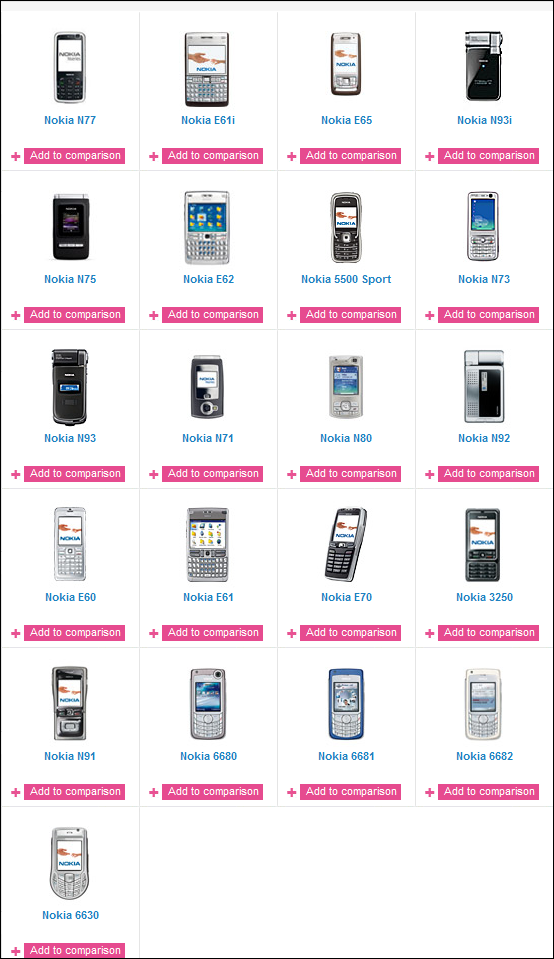
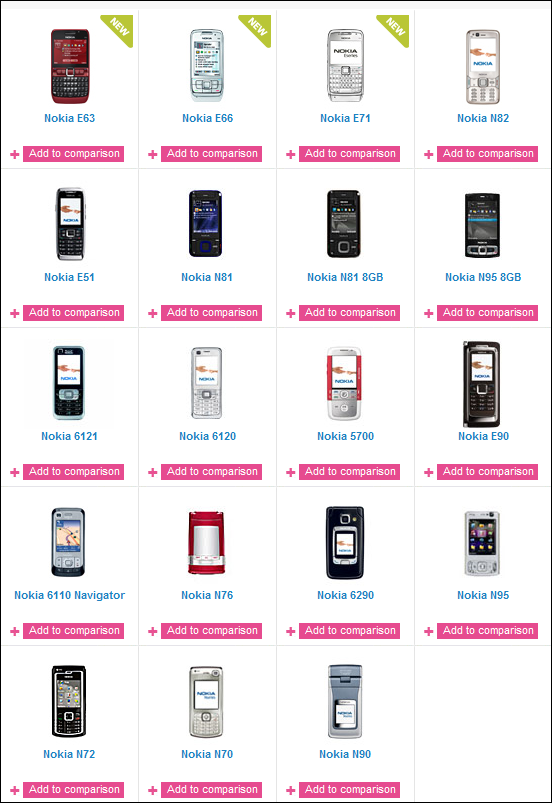
According to Engel's research, the vulnerable phones fall into two camps: S60 versions 2.6/3.0 (2FP2/3) and versions 2.8/3.1 (2FP3/3FP1). That's still too many numbers, so let's just select two phones.

Nokia 6680 — 2nd Edition, Feature Pack 2
Nokia N95 — 3rd Edition, Feature Pack 1.

The vulnerability is very simple to exploit via an SMS message. No special software is required and the message can be drafted from a large number of phones. The message just needs to be formatted in a particular way.

What happens when a vulnerable phone receives the exploit message?

Example 1 — on the older 6680 nothing happens. Nothing at all… The first exploit message is enough to crash the SMS messaging service. It is a completely silent attack and there are no hints of trouble presented to the victim. The phone will simply stop receiving SMS (as well as MMS) messages.

Phone falling in 6680 category

Example 2 — on the newer N95, nothing will happen until several messages have been sent by the attacker. Then, once the critical limit has been reached, the phone will prompt an alert: "Not enough memory to receive message(s). Delete some data first."


click on image to enlarge


The attack messages will not be visible from the Inbox, and deleting previously received messages will not resolve the problem.

There will also be one additional notification on the N95. A blinking envelope, indicating that the Inbox is full, appears in the upper right-hand corner of the display.

Turning the N95 off and on again may return some limited functionality, but that functionality is very fragile. One multi-part message was enough to completely disable our test phone's SMS/MMS service, at which point even cycling the power did not help.

Phone falling in N95 category

The exploit is detected as Exploit:SymbOS/SMSCurse and Mobile Security is capable of repairing exploited phones so that it will not lose any messages. Messages that have been sent while the messaging service is jammed will of course be lost.


you tube video explaing the exploit is HERE


Read more!

MotoYuva EM325 Launched in India


US-based mobile phone manufacturer Motorola has launched yet another entry-level phone in the MotoYuva series -- the MotoYuva EM 325.

The handset features a 1.8-inch (128 160) 65k TFT colour display, one-touch access to MP3 library for music, as well as expandable memory up to 2GB to store all your music.

The handset features a 1.3 megapixel camera with 4x zoom and auto-save option to snap pictures.

For music, it features a one-touch access to MP3 library for music, an expandable memory up to 2GB to store all your music, and also comes with FM along with Share, which utilizes RDS2 (Radio Data System) technology, allowing the user to share information about a favorite station with friends by sending it in a text message. It also has the MotoMusic feature available on the web and WAP.

Other features include Java support, the 'call blocking' facility that allows the user to accept or reject incoming calls. The phone can store up to 750 SMSes a large internal phonebook with 1000 entries.

The MotoYuva EM325 has been priced at Rs 5,150

Read more!